
Bespoke vs. Made-to-Measure vs. Ready-to-Wear: The Complete Suit Guide
Buying a suit can feel like learning a foreign language. Between “bespoke,” “made-to-measure” and “custom,” the terminology often tells you less than you need to know about what you are actually buying.
The distinction begins with the pattern, the template used to cut the cloth. Understanding how that pattern is created, and how the garment is fitted, helps you choose a suit that serves your body, your wardrobe and your budget.
Ready-to-Wear: Start with the Shoulders
A ready-to-wear suit is manufactured before you enter the shop, using standard sizes and predetermined proportions. You can try on the finished garment immediately, making this a practical option when time is short.
The limitation is the relationship between those proportions and your own. A jacket that closes comfortably across your chest might hang too broadly at the shoulders. Trousers that fit your waist may pull across the seat.
Alterations have boundaries. Shortening trousers or adjusting a waist is generally more straightforward than correcting a jacket’s shoulder structure or balance. Buying a larger size and taking everything in can become expensive while leaving the underlying fit unresolved.
Ready-to-wear can work well if a brand’s proportions closely match yours. Assess the shoulders, collar and jacket length first, then discuss achievable alterations before paying.
Made-to-Measure: Adapting an Existing Pattern
Made-to-measure starts with an established pattern that is adjusted to your measurements. Depending on the maker, you may choose the cloth, lining, lapels, pockets and other finishing details.
This offers a useful middle ground. Someone who regularly finds jackets too loose through the waist, for example, may achieve a cleaner silhouette through measured adjustments to the maker’s base design.
However, the available changes depend on the system. Some accommodate posture and shoulder differences; others offer a narrower set of adjustments. The original pattern and house style still influence the result.
The buying risk lies in vague language. A garment described as “custom” may be made-to-measure, even when its price suggests a more individual service. Ask what the commission includes before judging its value.
Bespoke Begins with Your Body
In traditional bespoke tailoring, an individual pattern is drafted for the client. Measurements are considered alongside posture, shoulder slope, body asymmetry and the way you naturally stand.
Those observations affect how the cloth hangs. A slightly lower shoulder, a prominent chest or a forward stance may require changes that extend beyond adding or subtracting centimetres.
Why the Fittings Matter
A bespoke commission typically includes fittings while the garment is still being developed. At a basted fitting, temporary stitching holds the main sections together so the tailor can assess balance and make corrections before completing the construction.
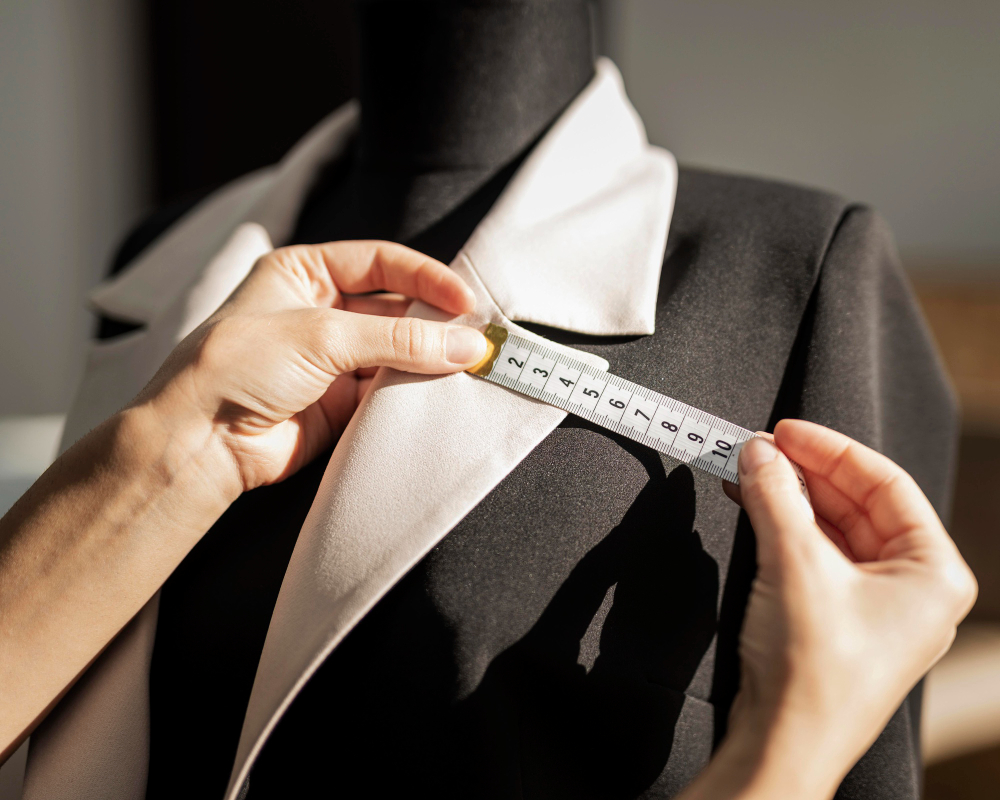
The collar should sit close to the neck. Lapels should lie smoothly, and the jacket should allow comfortable movement. Trousers need enough room through the seat and thigh to remain comfortable when you sit.
The individual pattern and the fitting process work together. Bespoke offers broad scope to shape the silhouette and specify details, guided by the cloth, construction and tailor’s expertise.
Fabric deserves equal attention. For Hua Hin’s warmth, an open-weave tropical wool can offer airflow with a crisp appearance. Linen brings a textured surface and relaxed creasing, particularly suited to coastal celebrations. Consider where you will wear the finished suit most often, including the climate back home.
Questions Worth Asking Before You Order
Begin with the pattern, then establish how the tailor will refine the fit:
- Will you draft a new pattern specifically for my body? For traditional bespoke, ask about an individual paper pattern and how it records your posture.
- What happens during the fittings? Ask whether you will try the garment at an intermediate construction stage.
- Which adjustments and construction choices are included? Clarify the scope before comparing prices.
- When should I attend fittings and collect the suit? Agree on a schedule that accommodates your departure or event.
A paper pattern is an important sign of traditional bespoke practice. Its value comes from the skilled cutting and fitting that follow.
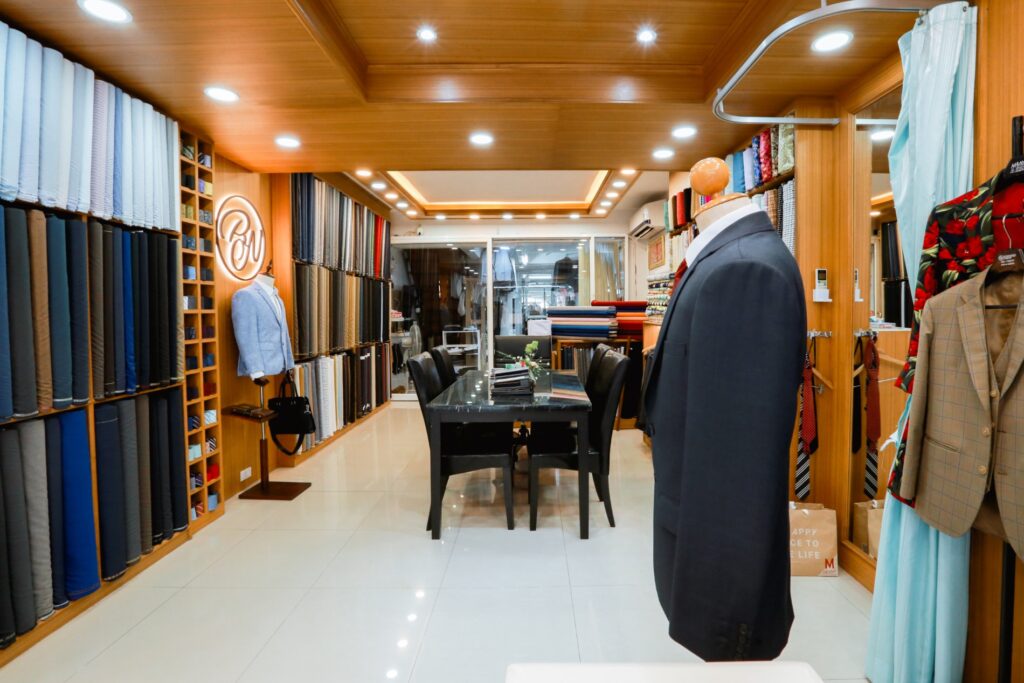
At P&N Tailor, over three decades of tailoring experience support a personal approach to bespoke suits, dresses and occasionwear. A team of over 20 skilled professionals brings careful attention to the details that make a garment feel distinctly yours.
During your Hua Hin visit, allow time to discuss fabrics, explain how you dress and attend the agreed fittings. Message P&N Tailor on WhatsApp or visit the Hua Hin Soi 80 workshop to begin designing your bespoke suit, with your fit, preferences and delivery schedule considered from the start.
Bespoke tailoring drafts an individual paper pattern from scratch for your exact posture and shoulder slope, whereas Made-to-Measure (MTM) alters a pre-existing block pattern and Ready-to-Wear (RTW) uses fixed factory sizes. At P&N Tailor on Hua Hin Soi 80 (established in 1996), every suit is cut from a custom pattern with 1–2 fittings in 3–5 days, or 24–48 hours via express service.
Bespoke vs. Made-to-Measure vs. Ready-to-Wear Comparison
Compare how pattern drafting, posture correction, internal construction, and fittings differ across the three suiting tiers.
| Feature / Specification | Bespoke Tailoring (P&N Standard) | Made-to-Measure (MTM) | Ready-to-Wear (Off-the-Rack) |
|---|---|---|---|
| Pattern Drafting | 100% Individual Paper Pattern | Pre-existing block pattern adjusted | Standardized mass-market grading |
| Posture & Shoulder Slope | Fully customized for uneven shoulders, stoop, or chest depth | Limited to basic length and waist tolerances | No Posture Correction |
| Fitting Sessions | 1–2 live basted and final fittings with master tailor | Usually 1 final try-on upon delivery | Basic hem or sleeve shortening only |
| Internal Architecture | Choice of Full Canvas, Half Canvas, or Lightweight Fused | Fixed factory construction (mostly fused/half-canvas) | Mass-produced fused interlining |
| Fabric & Detail Choice | Full curation of wools, linens, linings, lapels & monogram | Restricted to preset brand swatch books | Fixed fabric and styling |
| Turnaround at P&N Tailor | 3–5 Days (24–48h Express Available) | Typically 3–6 weeks (factory order) | Immediate (+1–3 days for alterations) |
Key Bespoke Craftsmanship Facts
Over 80% of men have one shoulder slightly lower than the other; bespoke paper patterning eliminates collar gaps and lapel bowing that off-the-rack suits cannot fix.
P&N Tailor archives every client's bespoke paper pattern on Hua Hin Soi 80, allowing effortless future reorders via WhatsApp with worldwide delivery.
Founded in 1996 opposite Hua Hin Railway Station, P&N Tailor combines traditional Savile Row cutting principles with a 4.9-star Google review rating.