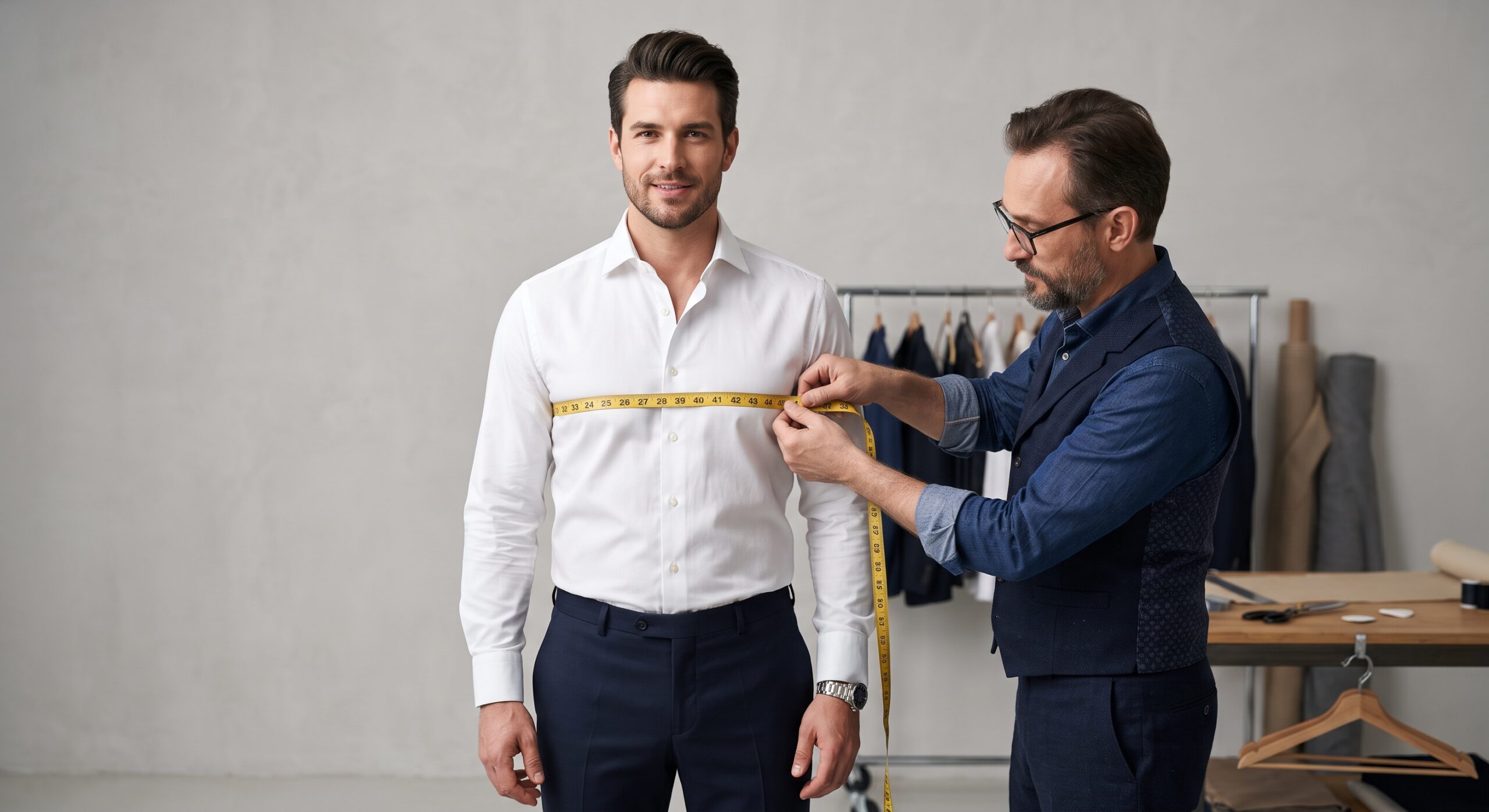

How to Measure for a Custom Suit: A Complete Guide to Getting the Perfect Fit
A perfectly tailored suit begins with accurate measurements. Every measurement plays an important role in achieving the right fit, comfort, and overall appearance.
Whether you are considering a Made-to-Measure or Bespoke Suit, understanding the essential body measurements will help you appreciate the craftsmanship behind custom tailoring.
In this guide, we explain how to measure the key areas of your body for a well-fitted jacket and trousers, along with practical tips to ensure accurate measurements.
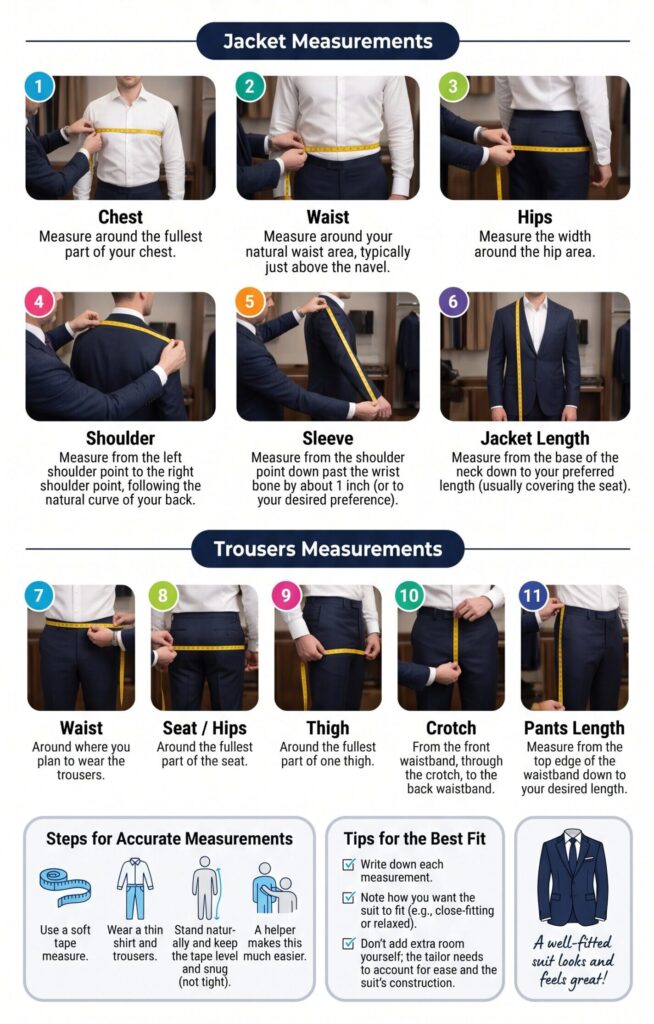
Jacket Measurements
Accurate jacket measurements are essential to creating a garment that complements your body shape. From the chest and shoulders to the sleeves and overall jacket length, each measurement contributes to the final fit and silhouette.
- Chest: Measure around the fullest part of your chest, passing the tape measure under your arms and around your back. Keep the tape parallel to the floor without pulling it too tightly.
- Waist: Measure around your natural waistline, generally located slightly above the navel. Stand naturally and avoid holding in or tightening your stomach while measuring.
- Hips: Measure around the fullest part of your hips, keeping the measuring tape level and parallel to the floor.
- Shoulder: Measure from the tip of one shoulder to the tip of the other, following the natural contour of your shoulders and upper back. This measurement helps establish the correct shoulder fit and jacket structure.
- Front Width (Front Shoulder): Measure straight across the front of your body, from one underarm area to the other. This measurement helps determine the correct front width and chest proportions of the jacket.
- Back Width (Back Shoulder): Measure straight across your back, from one underarm area to the other. This measurement helps establish the appropriate back width and allows sufficient room for comfortable movement.
- Sleeve Length: Measure from the shoulder point down along the arm, passing the elbow and ending at the wrist area. The sleeve length can be adjusted according to your preferred style and how much shirt cuff you wish to show.
- Upper Arm: Measure around the fullest part of your upper arm, just below the armpit. Keep your arm relaxed and avoid flexing your muscles to ensure a comfortable sleeve fit.
- Jacket Length: Measure from the base of the back of your neck down along your body to your desired jacket length. A classic jacket typically covers the seat, although the final length can be adjusted according to your body proportions and personal preference.
Trouser Measurements
Well-fitted trousers are just as important as a perfectly tailored jacket. Accurate trouser measurements help create a balanced silhouette while ensuring comfort and ease of movement.
- Waist: Measure around the position where you intend to wear your trousers. This may be at the high waist, natural waist, or lower waist, depending on your preferred trouser style.
- Seat / Hips: Measure around the fullest part of your seat and hips. Keep the measuring tape level to ensure sufficient room for sitting and moving comfortably.
- Thigh: Measure around the fullest part of one thigh while standing naturally. This measurement helps determine the appropriate fit through the upper leg.
- Crotch Length: Measure along the crotch line, starting from the front waistband, passing between the legs, and continuing to the back waistband. This measurement is important for achieving the correct rise and a comfortable fit, particularly for high-rise and regular-rise trousers.
- Trouser Length: Measure from the top edge of the waistband down to your desired trouser length. It is recommended to consider the shoes you intend to wear with your trousers to achieve the appropriate finishing length and overall appearance.
Tips for Taking Accurate Measurements
Accurate measurements are essential for achieving a well-fitted custom garment. Keep these practical tips in mind:
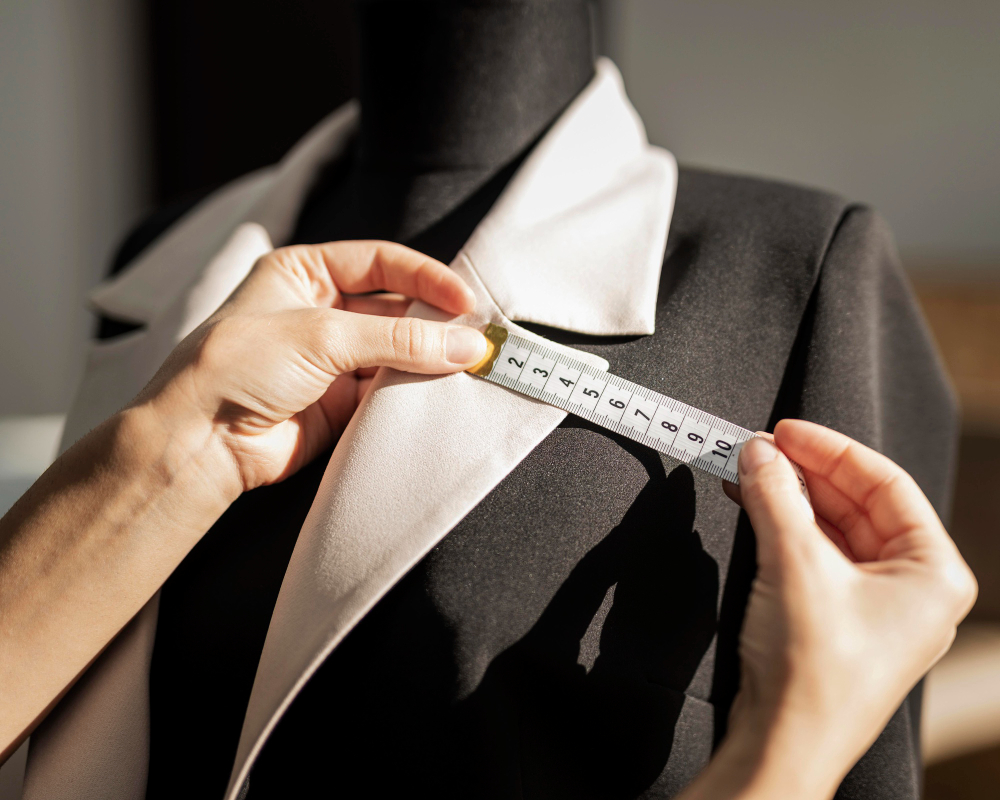
- Use a proper measuring tape: Always use a flexible measuring tape designed for clothing measurements.
- Maintain a natural posture: Stand comfortably without stretching, slouching, or tightening your muscles.
- Avoid pulling the tape too tightly: The tape should sit comfortably against your body without compressing it.
- Measure twice: Take each measurement at least twice to minimise errors.
- Consult a professional tailor: For Bespoke tailoring, having an experienced tailor take your measurements ensures greater accuracy and consideration of your individual body shape.
The Perfect Suit Begins with the Perfect Measurements
A beautifully tailored suit is about more than just choosing fine fabrics and an elegant design. Accurate measurements are equally important in creating a garment that fits naturally and complements your body shape.
Every detail, from shoulder width and sleeve length to waist proportions, contributes to the overall appearance and comfort of your suit.
Whether you need a suit for business, a wedding, a formal occasion, or a special event, careful measurements and thoughtful tailoring will help create a garment that reflects your personal style and individuality.
Because the finest suit is not made to standard measurements. It is made specifically for you.
P&N Tailor – The Art of Bespoke Tailoring.